





Blobitecture

'Blobitecture', also known as 'blobism', is a term given to a post-modern architectural style characterised by curved and rounded building shapes, or 'blob architecture'. Blobitecture buildings appear to have an organic form that is soft and free-flowing, yet comes together to produce a complex whole.
The design of buildings has historically been limited by the performance of materials found in nature or easily manufactured from available materials. With the modern capability of technology to supply entirely 'artificial' complex substances, with unique performance characteristics the range of possible design forms has grown considerably.
Architecture radicals, such as Archigram in the 1960s, Buckminster Fuller and the deconstructivists, began to design unusual, inflatable and 'plastic' buildings that exploited this potential, and sometimes were even beyond the structural possibilities of the time.
However, it was in the 1990s, with the wide-spread adoption of computer-aided design (CAD) that buildings adopting unconventional geometric shapes, free of right-angles, became practical. The architect Greg Lynn coined the term 'blobitecture', which he based on the software feature that created Binary Large Objects.
Some of the most prominent examples of blobitecture include:
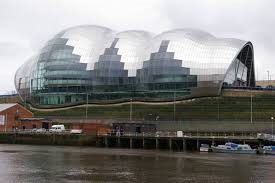
De Admirant Entrance Building, Eindhoven

Selfridges Buildings, Birmingham

Metropol Parasol, Seville

Eden Project, Cornwall

Kunsthaus Graz (see top image)
Experience Music Project, Seattle

[edit] Related articles on Designing Buildings Wiki
Featured articles
Check out some of the best features and news from Designing Buildings as well as key stories from around the web.

The Master Builder: William Butterfield and his times. Book review.
Why construction can't afford to ignore the skills gap.
Building Safety Regulator, 19 August

Gill Kernick appointed Independent Chair of Residents’ Panel.
Connecting knowledge, technology and conservation
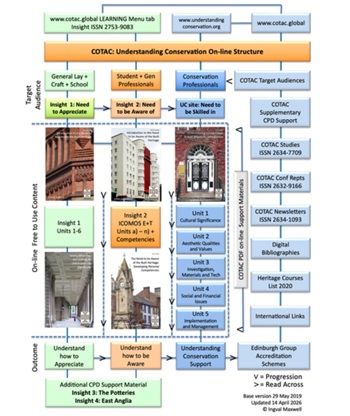
Building competence for the future of built heritage.
Building Regulations and Building Safety Act
CIOB publishes free advice for non-domestic clients.
Building Safety Newsletter from MHCLG.

An extraordinary record of steel engineering worldwide.

Households living near new pylons to save on bills.

ECA warns growth must not outpace grid capacity or skills.
The role of the client and decision making

CIOB response to built environment professions call for evidence.
Construction's sustainability reporting revolution

Tracking upfront embodied carbon with digital tools.
ECA welcomes procurement reforms

Public spending must back British jobs and skills.